Hair Dryer Demand in South Korea: Market Trends & Google News Insights 2026
Introduction
Hair dryer demand in South Korea keeps rising steadily amid the global K-beauty boom, and recent Google news coverage shows local consumers are no longer buying basic dryers only for drying hair. South Korea’s beauty culture, obsession with scalp care and glass hair, plus fast adoption of BLDC high-speed motors, are reshaping the whole hair styling appliance market. Even with intense competition between domestic brands like LG, JMW and global players such as Dyson, the market still delivers stable growth, especially in the premium segment. This article breaks down the core drivers, hot product features, consumer pain points, channel shifts and export opportunities for brands targeting South Korea.
H2: Why Hair Dryer Demand in South Korea Keeps Growing
South Korea’s hair dryer market reached around USD 0.7 billion in 2024 and is forecast to hit USD 1.2 billion by 2033, with a CAGR of 5.2%. The high-speed hair dryer sub-sector grows even faster at about 6.5% annually, outpacing traditional models. Three major forces fuel this demand, frequently highlighted in Korean beauty and tech news.
First, the mainstream shift from “simple drying” to “scalp and hair wellness”. Recent Google news reports from Korean beauty media point out that local consumers treat the scalp as extended facial skin. The viral glass hair trend requires smooth, low-frizz, shiny finishes, which pushes buyers to pick dryers with precise temperature control instead of cheap high-heat models that damage bleached, permed hair. Many young Koreans regularly do salon treatments, so at-home styling tools that replicate salon results are highly sought after.
Second, Gen Z and millennial consumers prioritize lightweight, low-noise and portable designs. Urban office workers and frequent travellers search for foldable, free-voltage travel hair dryers. Dyson’s travel Supersonic launch in South Korea captured big headlines in 2025, proving compact premium dryers are a hot niche.
Third, salon demand remains a solid base. South Korea has a dense salon network, and professional stylists prefer durable BLDC salon dryers with strong airflow. Many salons also retail styling appliances to customers, forming a powerful offline-to-home sales channel.
H2: Hot Features That Korean Consumers Search For (Google Shopping & News Trend)
If you sell hair dryers to South Korea, aligning product specs with local search trends is critical. News reviews and top-ranking Korean e-commerce lists repeatedly highlight these must-have features:
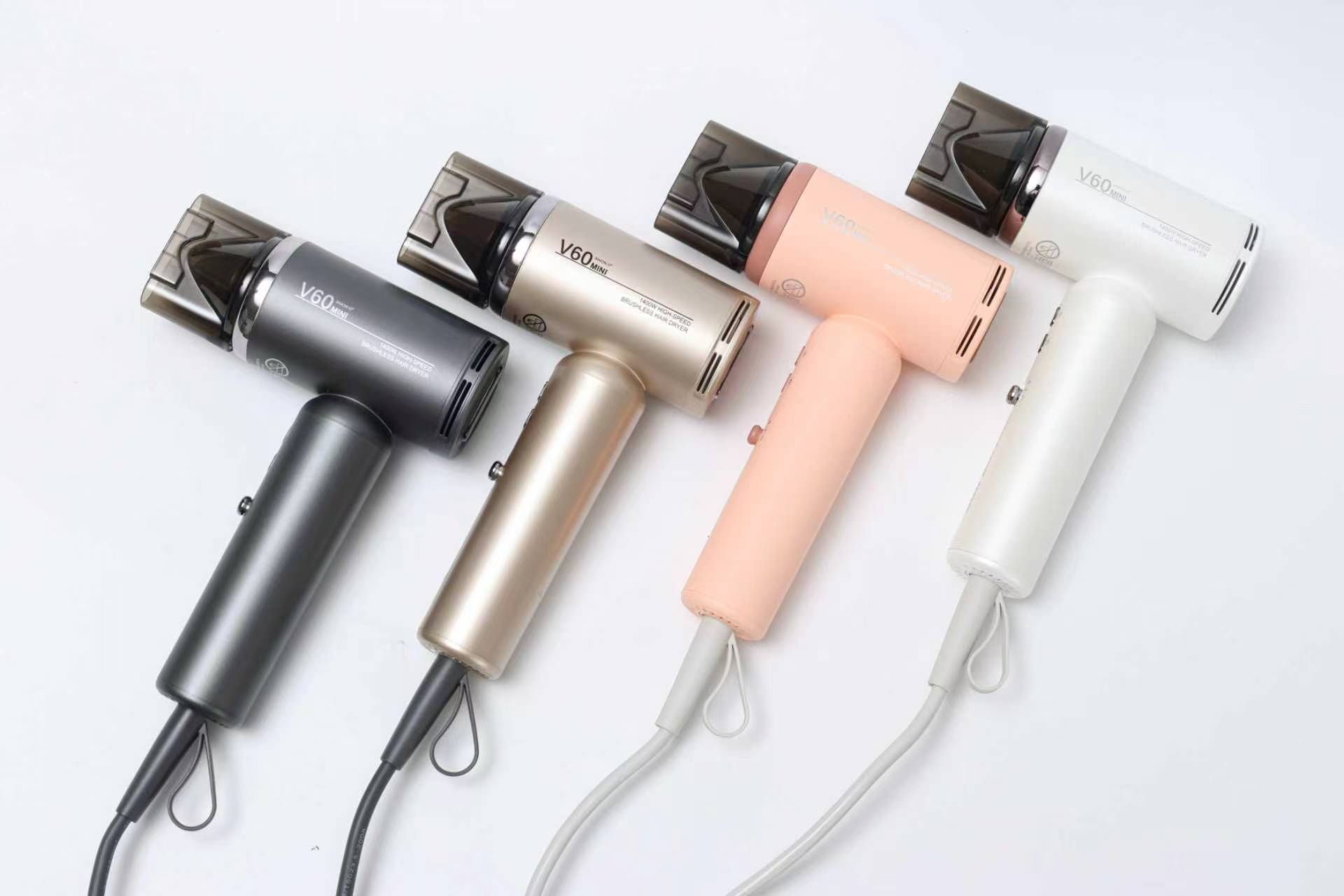
- BLDC brushless high-speed motor: This is the top keyword. Korean buyers know BLDC means faster drying, lower noise and longer lifespan compared to ordinary DC motors.
- Ionic / nano-ion / tourmaline technology: Anti-frizz, static reduction and hair shine are core selling points, directly matching glass hair demands.
- Smart constant temperature control: Heat damage prevention is non-negotiable. Many Korean reviewers warn against dryers with unstable heat, especially for damaged coloured hair.
- Lightweight body: Under 400g is a strong selling point for home and travel use.
- Scalp mode / gentle low-temperature setting: A fast-growing feature, tied to the scalp longevity care trend covered in 2026 Korean haircare news.
- Energy efficiency & quiet operation: Sustainable, low-noise models gain preference among eco-conscious buyers.
Price segmentation is clear: budget ionic models occupy the mass market; mid-range BLDC dryers are the fastest-growing category; flagship premium models from Dyson, LG and Panasonic target high-income households and salon professionals.
H2: Competitive Landscape & Latest Google News Updates
South Korea’s hair dryer market is a battlefield mixing local giants, global premium brands and Chinese OEM/ODM exporters.
Local brands: LG, JMW and Shinil dominate offline home appliance stores and Coupang, Naver Shopping. JMW’s foldable free-voltage BLDC model received wide press coverage after its launch, targeting travel and household users.
Global premium brands: Dyson still leads the high-end segment, with celebrity marketing and strong tech storytelling. Panasonic’s nanoe series stays popular for moisture care and scalp modes.
Chinese OEM manufacturers are gaining traction in mid-range BLDC segments. News from Korean import and beauty supply channels shows affordable high-speed ionic dryers are winning market share on Coupang, 11street and social commerce, as long as they pass KC safety certification.
One recent hot topic from Korean tech news: consumers are increasingly sensitive to safety standards. Uncertified imported dryers are removed from platforms, so KC certification is a hard entry threshold, not optional.
H2: Sales Channel Shift: Online & Short-Form Content Drive Discovery
Google search and local platform data show over two-thirds of personal care appliance purchases in South Korea happen online, dominated by Coupang, Naver Shopping, Gmarket and live commerce.
Short-form video content on Instagram, YouTube Shorts and TikTok Korea strongly shapes purchase decisions. Beauty influencers compare dryer wind speed, noise level and hair finish effect. Many buyers search Google for “best ionic hair dryer Korea” or “BLDC hair dryer review” before clicking e-commerce links.
For overseas brands, Google Shopping ads, YouTube review collaborations and localized Korean landing pages perform better than simple banner ads. Product pages should clearly list ionic function, weight, noise level and KC certification information.
H2: Challenges for Brands Entering the South Korea Market
While hair dryer demand in South Korea is promising, exporters need to watch these pain points frequently discussed in industry news:
- KC certification requirement: Electrical safety and electromagnetic compatibility certification is mandatory; customs clearance and platform listing will fail without it.URL:https://kats.go.kr/en/content.do?cmsid=412
- High consumer expectation: Korean buyers read detailed reviews and return products easily if noise, weight or heat control does not match descriptions.
- Intense price competition: Many local and Chinese suppliers launch similar BLDC ionic models, so pure low-price competition has thin margins.
- Sustainability pressure: Media coverage is rising on energy consumption and recyclable materials, especially for premium positioning.
H2: Opportunities for OEM & ODM Hair Dryer Suppliers
For manufacturers focusing on export, South Korea offers three clear opportunities:
- Mid-range BLDC ionic dryers: Fill the gap between expensive flagship brands and low-performance basic dryers.
- Travel foldable free-voltage dryers: Target young travellers and hotel B2B orders.
- Salon-grade professional dryers: Supply beauty salons and local beauty distributors.
Product copy and marketing should focus on scalp protection, anti-frizz glass hair finish, lightweight and low noise, rather than only “high wattage”.
Conclusion
Hair dryer demand in South Korea is driven not just by purchasing power, but by the deep-rooted K-beauty hair wellness trend. Glass hair, scalp-first care, and preference for salon-level at-home styling keep lifting demand for high-speed BLDC ionic dryers. Google news and local beauty media continuously highlight these trends, showing buyers are well-informed, tech-savvy and review-focused.
Brands that tailor features, pass KC certification, and build localized content for YouTube and Naver search can capture stable orders in this growing market. As the boundary between home styling and salon care continues to blur, hair dryers with gentle, smart, hair-protecting technology will remain the core winner in South Korea.
South Korea hair dryer market forecast
URL:https://www.verifiedmarketresearch.com/product/south-korea-hair-dryer-market/