SMT and PCBA Manufacturing for Mexico and Türkiye: From Prototype to Reliable Production
October 7, 2026 | CHK-TRONIC
For appliance manufacturers in Mexico and Türkiye, a successful control board project must move beyond a working prototype. Production boards need consistent assembly quality, the correct firmware and a test process that verifies the agreed functions.
Recent manufacturing news makes this a timely discussion.
In Mexico, an October 5 report from El Informador highlighted calls from the head of Index Mexicali for stronger regional supply chains and greater participation by domestic suppliers.
In Türkiye, September manufacturing PMI results released on October 1 showed the index declining from 48.1 to 47.9, indicating continued weakness in manufacturing conditions.
These developments affect different markets, but they raise a shared purchasing question: how can manufacturers organize PCBA supply so that quality, production schedules and engineering changes remain manageable?
For hair dryers, straighteners and curling irons, the answer starts with connecting SMT assembly to the complete control system.
Mexico: Make PCBA Supply Compatible with Local Assembly
For a brand assembling appliances in Mexico, externally supplied control boards need to arrive with clear integration requirements.
Before production begins, the electronics supplier and appliance assembly team should agree on board dimensions, mounting points, connectors, wiring and the approved motor or heater configuration.
The handover should also define how incoming boards will be identified and checked. A production batch should be associated with its hardware revision, firmware version and agreed acceptance criteria.
The Mexican discussion around local supply chains does not automatically imply greater demand for imported PCBAs. It does reinforce the value of clearly defining which activities each supplier performs and how their work connects to final assembly.
Türkiye: Plan Production Around Confirmed Requirements
Türkiye’s manufacturing PMI provides broad industrial context rather than a forecast for individual appliance categories.
For buyers operating with uncertain demand, a practical response is to agree on the production plan before committing to volume. Prototype quantities, pilot builds, material availability and repeat-order schedules should be discussed separately.
Engineering changes deserve particular attention. A late change to a connector, component or operating mode can affect material preparation, assembly instructions, programming and testing.
An approved production specification helps both teams understand what is ready to manufacture and what still requires review.
SMT Quality Begins Before Component Placement
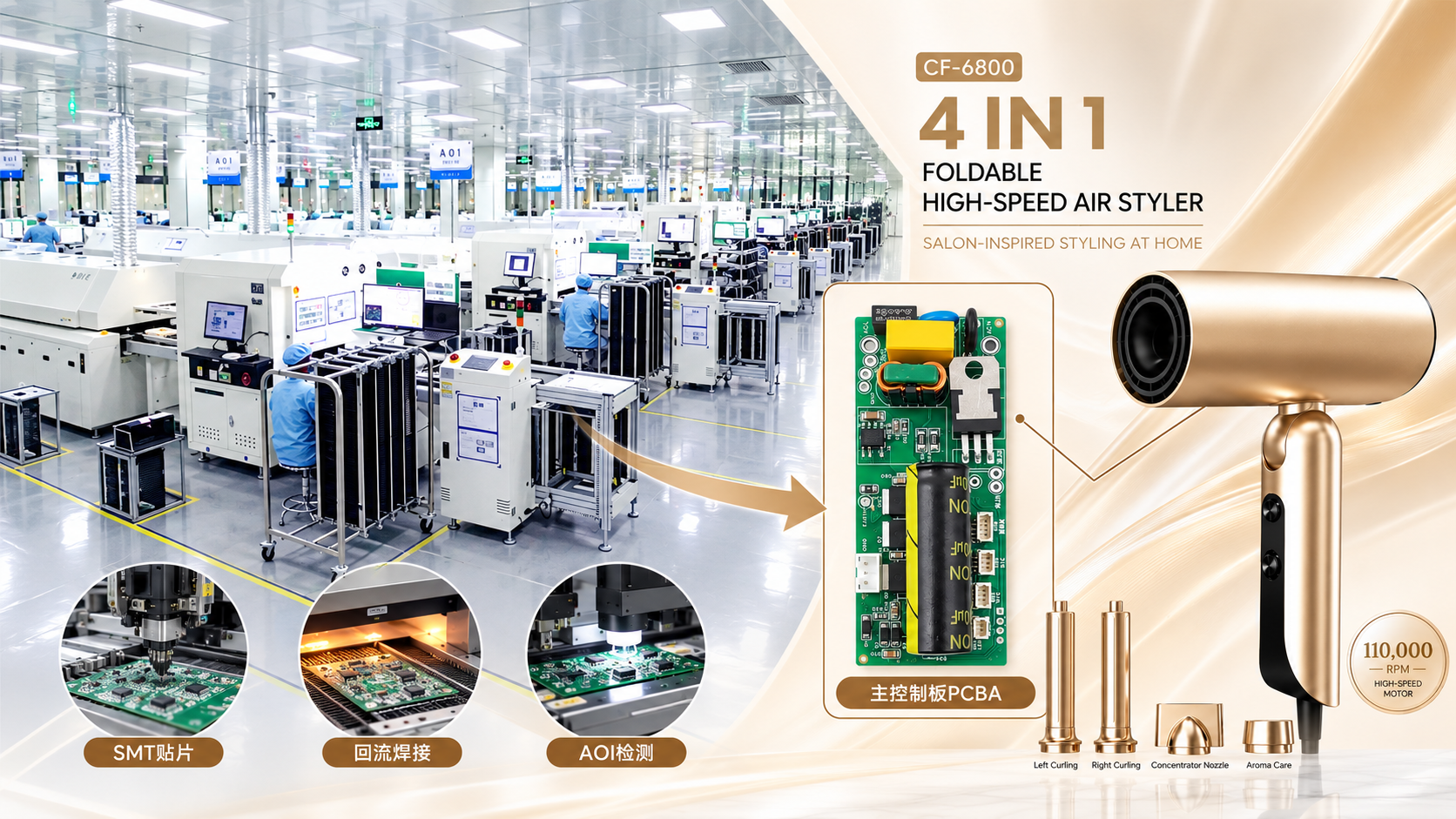
Surface mount technology, or SMT, is the process used to mount and solder surface-mount components onto a printed circuit board.
For a control board project, preparation should begin with a review of the manufacturing data. The PCB revision, bill of materials, component placement information and assembly drawings need to describe the same approved design.
A useful pre-production review asks:
- Are component packages, polarity and orientation clearly defined?
- Are proposed alternative components approved?
- Can the board be assembled and handled without obstructing critical features?
- Are programming and test connections accessible?
- Are connector positions compatible with the final appliance?
Resolving these questions before the production run gives the assembly team a clearer process to follow.
Define the Assembly and Inspection Plan
A typical SMT process includes solder paste printing, component placement and reflow soldering, with inspection at appropriate stages.
Solder paste inspection evaluates the printed deposits. Automated optical inspection examines visible assembly features, including component placement and solder joints. The inspection approach should match the design and its potential defects.
For appliance control boards, the production route may also include through-hole components, connectors or wire assembly after SMT. These operations need their own instructions and acceptance criteria.
Buyers should request a project-specific process and inspection plan rather than assume that every board follows an identical route.
Connect Assembly Quality with Firmware and Functional Testing
An assembled board also needs the correct program and operating configuration.
For a high-speed hair dryer, the agreed functional test may cover motor start-up, speed selection, heating commands, buttons, indicators and sensor responses. For a straightener or curling iron, the scope may include temperature sensing, heater control and display behavior.
Optical inspection and functional testing answer different questions. Assembly inspection examines physical workmanship; functional testing checks specified electrical and operating behavior.
Production checks should also be distinguished from design validation. Reliability, abnormal-condition and complete-appliance evaluations need a separate plan appropriate to the product.
Use the Pilot Build to Prepare for Repeat Orders
A pilot build is an opportunity to check whether the approved design can be manufactured, programmed and tested consistently.
Before increasing volume, review assembly findings, test failures, rework and any differences between the prototype and production configuration.
Document the approved corrections and update the relevant files. Production should then proceed against a defined hardware revision, bill of materials, firmware release and test specification.
For overseas customers, this documentation also supports communication when a returned unit or assembly issue needs investigation.
CHK-TRONIC: Engineering Connected to PCBA Manufacturing
CHK-TRONIC’s manufacturing services bring together control board engineering, embedded software, prototyping, SMT assembly, programming, testing and mass-production support for beauty appliances.
Our focus is the complete control solution: how the circuit, firmware and manufacturing process work together in the intended product.
For customers in Mexico and Türkiye, the project discussion can begin with an existing board design or a new appliance specification. The engineering and production scope can then be defined around the product’s stage of development.
Send your Gerber files, BOM and assembly requirements for an existing design. For a new control board, send the input voltage, motor or heater specifications, PCB dimensions, required functions and expected quantities.
Please include your target market and final assembly location.
Request a PCBA Engineering and Manufacturing Review
Email: jack@chkcorp.cn
Explore our PCBA manufacturing services, control technologies and embedded firmware development.
Sources and Further Reading
- El Informador — Index Mexicali seeks greater domestic content in manufacturing, October 5, 2026
- Reuters — Türkiye manufacturing PMI falls to 47.9 in September, October 1, 2026
- Koh Young — SMT process and inspection technology
The manufacturing recommendations are CHK-TRONIC’s editorial analysis. Specific inspection methods, test coverage and delivery arrangements should be agreed for each project.